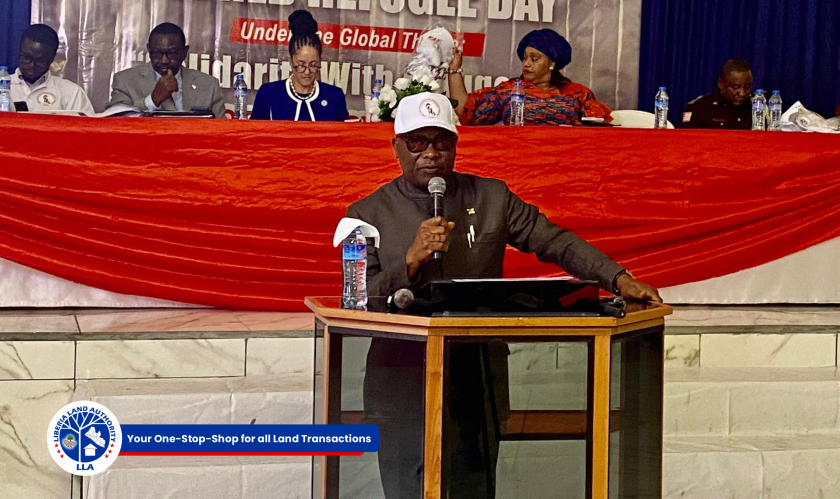

Distinguished officials of Government, Officials of the Liberia Refugee Repatriation and Resettlement Commission, members of the diplomatic corps, development partners, representatives of the United Nations system, civil society organizations, traditional leaders, fellow Liberians, refugees, returnees, displaced persons, ladies and gentlemen:
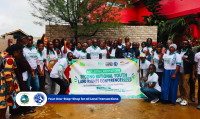
I am honored to join you today as we commemorate World Refugee Day 2026, a day set aside by the international community to recognize the courage, resilience, and contributions of refugees and displaced persons around the world.
This year's observance provides an important opportunity to reflect on our collective responsibility to promote protection, dignity, inclusion, and durable solutions for those who have been forced to flee their homes due to conflict, persecution, violence, environmental pressures, and other humanitarian crises.
As a nation that has experienced the painful realities of civil conflict and mass displacement, Liberia understands firsthand the hardships faced by refugees, returnees, internally displaced persons, and host communities.
Our own history reminds us that rebuilding lives and restoring hope require more than humanitarian assistance alone. Sustainable peace, social cohesion, economic recovery, and national development depend significantly on secure land rights, tenure security, equitable access to resources, and effective governance systems.
Land remains one of Liberia's most valuable national assets. It is central to livelihoods, agriculture, environmental sustainability, investment, and community identity. At the same time, land remains one of the most sensitive issues in our post-conflict recovery process. Across many parts of the country, unresolved land disputes continue to undermine social harmony, discourage private investment, impede development initiatives, and reduce opportunities for local and national revenue generation.
In recent years, concerns have grown in southeastern Liberia regarding increasing encroachments on customary and public lands by foreign nationals, particularly within remote forested regions. Local authorities and community leaders have reported the expansion of informal settlements into ecologically sensitive areas, including protected forests and national parks that form part of the Upper Guinean Forest Ecosystem—one of West Africa's most important biodiversity hotspots
During a recent assessment mission conducted by the Liberia Land Authority, local government officials, traditional leaders, and community representatives expressed growing concerns regarding the presence of significant numbers of foreign informal settlers, particularly Burkinabè nationals, in portions of River Gee, Grand Gedeh, Maryland, and Nimba Counties. Local estimates indicate that more than 200,000 Burkinabè may currently be residing within forested areas across these counties.
While Liberia remains firmly committed to its humanitarian obligations under international and regional frameworks, as well as its longstanding tradition of hospitality and solidarity with vulnerable populations, the scale and nature of these informal settlements present complex challenges.
These challenges relate not only to land tenure security, but also to environmental conservation, natural resource management, local governance, public service delivery, and community stability.
The Liberia Land Authority, as the statutory institution mandated to regulate, administer, and govern Liberia's land sector, remains at the forefront of addressing these emerging concerns. However, the Authority continues to operate under significant resource and capacity constraints. With approximately 320 personnel serving the entire country—far below the estimated workforce requirement of 1,300 staff—the institution faces considerable limitations in fully executing its nationwide mandate.
Recognizing the urgency of these issues, I recently led a multidisciplinary technical assessment team to six counties in southeastern Liberia. The mission sought to evaluate land tenure security, land service delivery systems, sustainable land-use practices, and reports of land disputes, illegal occupancy, and emerging communal tensions.
Throughout the assessment, we engaged a broad range of stakeholders, including county superintendents, city mayors, traditional leaders, community residents, county land administrators, resident surveyors, county attorneys, members of the judiciary, and representatives of local civil society organizations. These consultations provided valuable insights into the realities facing communities and reinforced the need for stronger coordination among national institutions, local authorities, development partners, and affected populations.
The findings from these engagements underscore the importance of strengthening decentralized land governance systems, enhancing institutional accountability, improving access to land services, and increasing investments in land administration at the local level. They also highlight the need for more robust mechanisms to address land disputes, prevent environmental degradation, and promote peaceful coexistence among communities.
As we observe World Refugee Day, it is important to recognize that durable solutions for refugees, returnees, displaced persons, and migrant populations cannot be separated from responsible land governance. Secure land rights, transparent land administration, and effective land-use planning are critical components of long-term peacebuilding, sustainable development, and social stability.
I therefore call upon all stakeholders-including government institutions, development partners, traditional authorities, civil society organizations, host communities, and international agencies, to work collaboratively in addressing land-related challenges affecting vulnerable populations. Together, we must ensure that humanitarian considerations are balanced with the protection of community rights, environmental sustainability, lawful land governance, and national development priorities.
As we strengthen our response to displacement and migration challenges, we must also intensify efforts to combat illegal migration, human trafficking, sexual exploitation and abuse, and other practices that undermine human dignity and social stability. At the same time, we must continue to uphold the principles of protection, inclusion, compassion, and respect for those who genuinely seek refuge and safety.
On behalf of the Liberia Land Authority, I extend sincere appreciation to the Liberia Refugee Repatriation and Resettlement Commission for organizing this important observance. I also reaffirm the commitment of the Liberia Land Authority to supporting national efforts that promote peace, inclusion, responsible land governance, environmental stewardship, and sustainable development for all who reside within our borders.
Together, let us continue building a Liberia where communities are secure, land rights are protected, natural resources are responsibly managed, and every individual has the opportunity to live in dignity and peace.
May God bless the Republic of Liberia.
I thank you.
Keep following for more updates! You can also follow us on Facebook at, Liberia Land Authority
Published by: Kweshie Tetteh